June 6, 2026
The Future of Web Development with Next.js
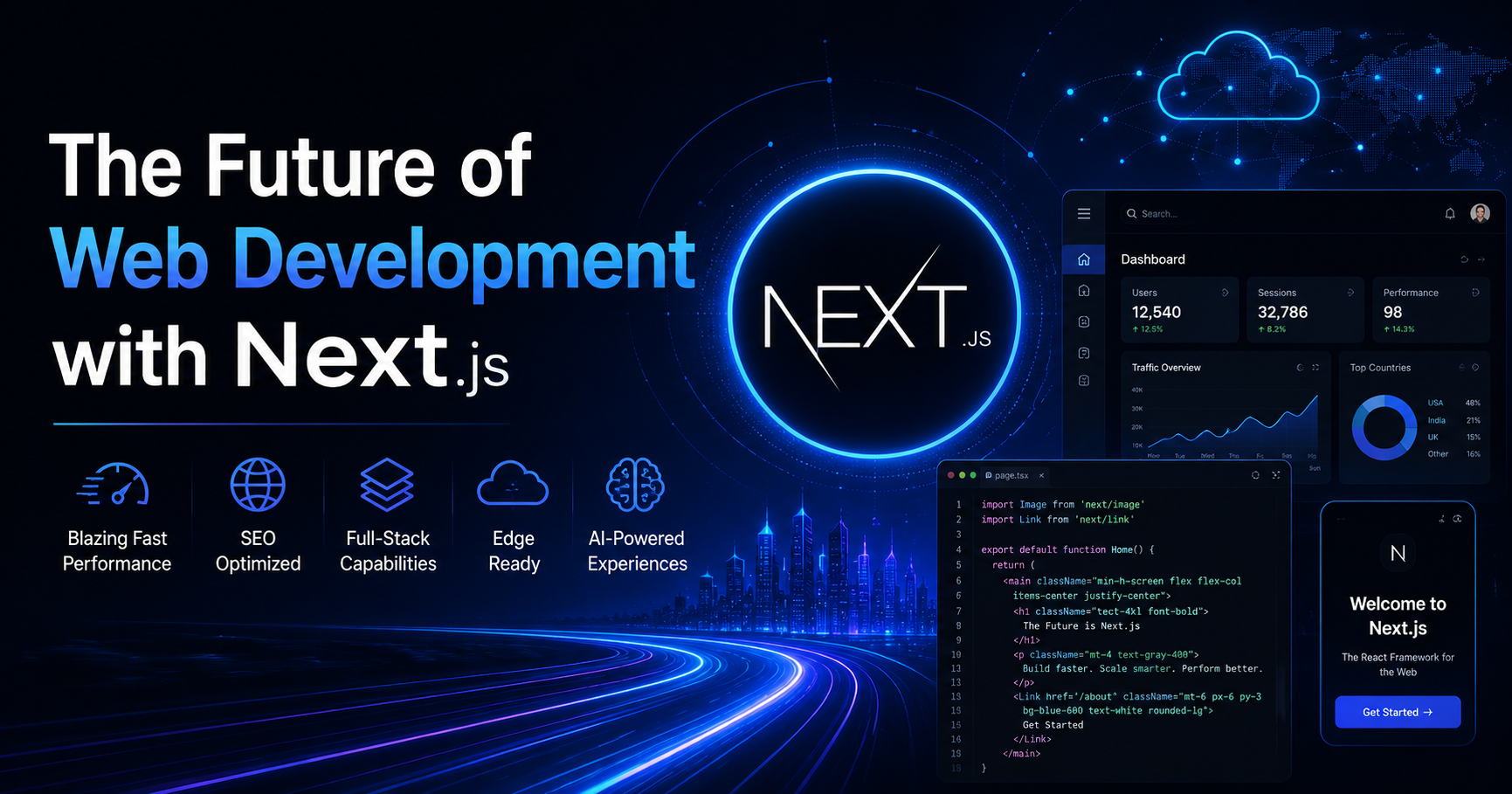
Introduction The web development landscape is evolving faster than ever. Businesses demand lightning-fast websites, developers seek better productivity, and users expect seamless digital experiences. In this rapidly changing environment, Next.js ha...
Introduction
The web development landscape is evolving faster than ever. Businesses demand lightning-fast websites, developers seek better productivity, and users expect seamless digital experiences. In this rapidly changing environment, Next.js has emerged as one of the most powerful frameworks shaping the future of modern web development.
Built on top of React, Next.js provides developers with the tools needed to create high-performance, scalable, and SEO-friendly applications. From startups to enterprise organizations, companies worldwide are adopting Next.js to build the next generation of web applications.
Why Next.js is Leading the Future
Traditional web applications often struggle with performance, search engine optimization, and scalability. Next.js addresses these challenges through a combination of innovative features and developer-friendly architecture.
Key Features
- Server-Side Rendering (SSR)
- Static Site Generation (SSG)
- Incremental Static Regeneration (ISR)
- API Routes
- Edge Computing Support
- Built-in Image Optimization
- Enhanced SEO Performance
- Full-Stack Development Capabilities
These features enable developers to deliver faster applications while reducing infrastructure complexity.
The Rise of Full-Stack React Development
One of the most significant trends in modern web development is the shift toward full-stack frameworks. Next.js allows developers to build both frontend and backend functionality within a single project.
With API Routes, Server Actions, and integrated database support, developers no longer need separate backend services for many applications. This streamlined approach offers several benefits:
- Faster development cycles
- Reduced maintenance costs
- Simplified deployment workflows
- Better developer productivity
- Easier scalability
As organizations continue prioritizing efficiency, full-stack development with Next.js is becoming increasingly attractive.
Server Components and Better Performance
Performance remains a critical factor for user experience and business success. Next.js introduces React Server Components, allowing parts of applications to render on the server instead of the client.
Benefits of Server Components
- Faster page loads
- Reduced JavaScript bundle sizes
- Improved Core Web Vitals
- Better SEO rankings
- Lower client-side processing requirements
- Enhanced user experience
This architecture represents a major step forward in how web applications are built and delivered.
AI-Powered Web Applications
Artificial Intelligence is transforming the software industry, and Next.js is perfectly positioned to support AI-powered experiences.
Developers can easily integrate:
- AI chatbots
- Content generation systems
- Smart recommendation engines
- Personalized user experiences
- AI-assisted search functionality
- Intelligent automation workflows
The flexibility of Next.js enables seamless integration with modern AI platforms while maintaining excellent application performance.
Edge Computing and Global Performance
Users expect instant experiences regardless of their location. Edge computing allows applications to execute closer to users, reducing latency and improving responsiveness.
Advantages of Edge Deployment
- Faster response times
- Lower latency worldwide
- Improved scalability
- Better reliability
- Enhanced global user experiences
- Reduced server load
As global applications continue growing, edge-first architectures will become increasingly important.
Enhanced Developer Experience
Developer productivity is a major factor in technology adoption. Next.js continues to improve the development experience through features such as:
- Fast Refresh
- App Router
- TypeScript Support
- Middleware
- Built-in Optimization Tools
- Advanced Caching Mechanisms
- Simplified Deployment Processes
These capabilities allow teams to focus on building features rather than managing infrastructure.
The Role of Next.js in Enterprise Applications
Large organizations require reliability, scalability, and maintainability. Next.js has proven itself capable of supporting enterprise-grade applications with:
- Robust performance optimization
- Security best practices
- Flexible deployment options
- Excellent developer tooling
- Long-term maintainability
- Modern architectural patterns
Many enterprises are migrating from traditional frameworks to modern solutions powered by Next.js.
What the Future Holds
The future of web development is moving toward:
- Faster user experiences
- AI-enhanced applications
- Full-stack development frameworks
- Edge-first architectures
- Better developer productivity
- Improved scalability and security
- Enhanced user personalization
- Seamless cloud-native deployments
Next.js aligns perfectly with these trends, making it one of the most future-ready frameworks available today.
Why Developers Should Learn Next.js
If you're planning a career in modern web development, learning Next.js offers several advantages:
- High industry demand
- Excellent job opportunities
- Strong community support
- Enterprise adoption
- Future-proof skillset
- Full-stack development capabilities
As businesses continue investing in modern web technologies, Next.js expertise will become even more valuable.
Conclusion
Next.js is more than just a React framework—it represents the future direction of web development. Its focus on performance, scalability, developer experience, and modern architecture makes it an ideal choice for building next-generation applications.
Whether you're a startup founder, freelance developer, or enterprise engineering team, investing in Next.js skills today can provide significant advantages in the years ahead. As web technologies continue evolving, Next.js is poised to remain at the forefront of innovation, enabling developers to build faster, smarter, and more powerful digital experiences.
Tags
Next.js React Web Development Frontend Development JavaScript Full Stack Development SEO Technology Trends